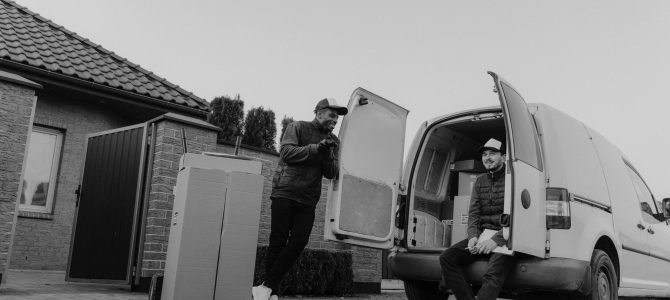
The moment you hang up the phone after booking a move, a quiet sequence of decisions begins that you’ll never witness. Names get matched to trucks, an address drops into a route, and someone in an office starts thinking about how your Tuesday will actually unfold. Most of the machinery that gets a crew to your door runs out of sight, and it’s worth seeing how the pieces fit.

What really happens after you request a quote?
Your request doesn’t go straight to a truck. It lands with an estimator or coordinator who reads what you’ve described and tries to translate it into volume, hours, and risk. How many rooms, how many stairs, whether there’s an elevator with a reservation window, whether anything is unusually heavy or fragile all feed into a number before anyone commits to a date.
From there the booking gets a slot in the company’s calendar, which is less like reserving a table and more like reserving a chunk of capacity: a crew size, a truck of a certain length, and a block of time. A good coordinator also flags anything that might complicate the day, so it’s worth asking questions early rather than assuming everything is understood. When people compare notes about london professional movers, the companies that get praised are usually the ones who asked the sharp questions at this stage instead of guessing.
Who decides which crew shows up at your door?
That decision usually belongs to a dispatcher or operations lead, not the salesperson who gave you the quote. They look at the shape of your job and assign people to match it. A move with a piano, a tight staircase, or a lot of specialty packing gets a crew with the right experience, while a straightforward one-bedroom might go to a smaller team.
Availability, seniority, and even who works well together all factor in. Crews aren’t interchangeable; dispatchers learn which lead can keep a chaotic morning calm and which pairing is fast on furniture disassembly, and they try to put the right mix on the jobs that need it.
How does a dispatcher plan a single day’s routes?
Building a day’s schedule is a puzzle with moving edges. A dispatcher starts with the jobs already booked, estimates how long each will realistically take, and then sequences them so trucks aren’t crossing the city needlessly or arriving before a loading dock opens. In a place like London, that means thinking about one-way streets downtown, construction detours, and the difference between a drive across the river at nine versus at four.
They also build in slack. An experienced planner knows the first job of the day almost always runs more smoothly than the last, because delays compound. So they’ll often front-load the complicated moves and leave simpler ones for the afternoon, when a crew is tired and the clock is less forgiving.
Why does the price sometimes shift between the estimate and the invoice?
An estimate is a prediction made with incomplete information, and reality has a way of correcting it. The most common reasons a final number moves are time and volume: the job took longer than described, there was more to carry than the phone call suggested, or access was harder than anyone expected. A flight of stairs that wasn’t mentioned, a sofa that didn’t fit the first doorway, a long carry from the truck to the entrance all add real minutes.
Materials can shift the total too, if the crew used more wrapping, boxes, or specialty padding than planned. None of this should be a mystery. A reputable company explains how its pricing works up front and documents changes as they happen, so the invoice reflects the actual job rather than a surprise.
What can you ask for that most customers never think to request?
Plenty, and almost none of it is unusual on the company’s side. You can ask for the same crew that handled your consultation, request a specific arrival window and be told honestly whether it’s realistic, or ask how disassembly and reassembly of larger furniture is handled. You can request the crew lead’s name in advance, confirm how overtime is billed, and ask what happens if the truck can’t park close to your door.
You can also ask about the chain of communication on the day itself: who to call if something changes, and how quickly dispatch can adjust. These questions cost nothing and tend to make the whole operation run more in your favour.
Between your first call and the sound of a truck backing in, a surprising amount of coordination happens that you never see. Understanding the scheduling, dispatch, and crew-assignment work behind the scenes helps you ask better questions and set clearer expectations. The more you know about how the booking actually works, the smoother your day on the other end of it tends to be.