
post

Who Should Actually Get Up on Your Roof?

You’ve spotted a dark stain spreading across the bedroom ceiling, or found a couple of shingles in the yard after a windy night. Now comes the decision nobody tells you how to make: do you climb up there yourself, call the guy who fixed your neighbor’s fence, or pay for a licensed roofer? Each of those three doors leads to a very different outcome for your wallet, your safety, and the long-term health of your home. Here’s how they actually compare.

Who Should Actually Get Up on Your Roof?

Which jobs can you honestly tackle yourself, and where does the risk outweigh the savings?

There’s a narrow band of roof work a careful homeowner can handle. Clearing debris from a valley, resealing a small gap around a vent boot, or replacing a single blown-off shingle on a low-slope garage roof are all within reach if you own an extension ladder and have decent balance. The math on those small tasks favors doing it yourself: a tube of roofing sealant and a bundle of matching shingles costs a fraction of a service call.

The trouble is how quickly that band narrows. A steep pitch, a second story, or a wet morning turns a simple patch into a fall risk, and falls from roof height are not minor injuries. Just as important, most homeowners can’t tell whether the leak they see is the leak that’s actually happening. Water travels along rafters and shows up far from its entry point, so a patch in the wrong spot leaves the real damage growing underneath. If diagnosing the problem is beyond you, so is fixing it.

Is a cheap handyman a bargain or a gamble on your biggest asset?

A general handyman sits in a tempting middle ground. He’ll show up faster than a busy roofing company, charge an hourly rate that feels reasonable, and happily tackle a repair a contractor might consider too small to bother with. For swapping out a flashing strip or nailing down loose ridge caps, that can genuinely be a fair deal.

The gamble is that roofing is a trade with its own logic, and a jack-of-all-trades usually hasn’t learned it. Shingles overlap in a specific sequence for a reason; step flashing has to be woven into the courses, not smeared over the top with caulk. Work that looks fine on the day it’s finished can fail two rainstorms later, and by then the handyman may be unreachable or uninsured for the damage he caused. In our humid, freeze-thaw climate, a sloppy seal doesn’t just leak, it invites rot and ice damming that spreads well beyond the original repair.

What does a licensed contractor give you that the other two can’t?

A licensed roofing contractor brings three things the DIYer and the handyman generally can’t: proper diagnosis, manufacturer-backed materials, and real liability coverage. They carry insurance that protects you if a worker is hurt on your property, they warranty their labor, and they install shingles in a way that keeps the manufacturer’s product warranty intact rather than voiding it.

They also see the whole system. When a regional outfit like Skywalker Roofing handles a roof repair, the inspection usually catches the underlying causes, worn underlayment, failing flashing, inadequate ventilation, that a quick patch would have missed entirely. That broader view is what separates fixing the symptom from fixing the problem, and it’s the main reason a contractor’s higher price often turns out cheaper over five years.

How do the real costs stack up once you factor in redos and liability?

On paper, the ranking is obvious: DIY is cheapest, the handyman is in the middle, the contractor costs the most up front. But the sticker price is only part of the equation. Add in the redo when a DIY patch fails, the interior drywall and insulation ruined by a leak the handyman never sealed, or the medical bill from an uninsured fall, and the cheap options can quietly become the expensive ones.

Liability is the piece people forget. If an uninsured helper gets hurt on your roof, that exposure can land on your homeowner’s policy. A licensed contractor absorbs that risk as part of the price. When you compare paths, compare the total likely cost, including the odds and price of a second attempt, not just the first invoice.

Which path fits the size and stakes of your particular repair?

Match the path to the stakes. A tiny, accessible, low-risk fix on a single-story roof is a reasonable DIY or handyman job. Anything involving a steep pitch, an active leak of unknown origin, structural questions, or an insurance claim belongs with a licensed professional.

The cheapest option is rarely the one with the lowest sticker price, it’s the one that solves the problem the first time without putting you on a ladder you shouldn’t be on. Weigh the size of the repair against the size of the risk, and let that ratio, not the hourly rate, decide who climbs up there.

post

Saved the Number, Still Couldn’t Find It

Why does the one phone number you deliberately saved turn out to be the hardest thing to find on the morning it matters? You typed it in weeks ago, felt organized, and then move day arrives with a truck idling in the wrong spot and your thumb scrolling past forty contacts named some version of “movers.” The problem usually isn’t the number. It’s everything around how you stored it. Here are the small filing errors that quietly turn a saved contact into a dead end.

Saved the Number, Still Couldn't Find It

Did you save it under a name you’ll actually remember at 7 a.m.?

Most people save a mover under whatever the phone auto-suggested: a company name, a first name a rep gave, or nothing but a bare number. Then a month passes. On move morning, running on half a coffee, you don’t remember whether you filed them under the business, the salesperson, or the word “quote.” You search “moving” and get three entries, none obviously right.

Save it under a name that describes your situation, not theirs. Something like “MOVERS – Sept 14 job” or “MOVER – main line” beats a company name you’ll blank on. Put the useful bit first so it surfaces the instant you start typing. And delete the two placeholder numbers you saved while comparing options; the ones you didn’t book are just landmines waiting for a panicked thumb.

Why does the number you saved ring the sales desk instead of dispatch?

Here’s the trap that catches careful people. You did save the right company. But the number you kept is the one from the first ad or the quote form auto-reply, and that line goes to a sales desk that’s cheerful at 10 a.m. on a Tuesday and silent when a truck is late on a Saturday. Sales books the job. It rarely knows where your driver is right now.

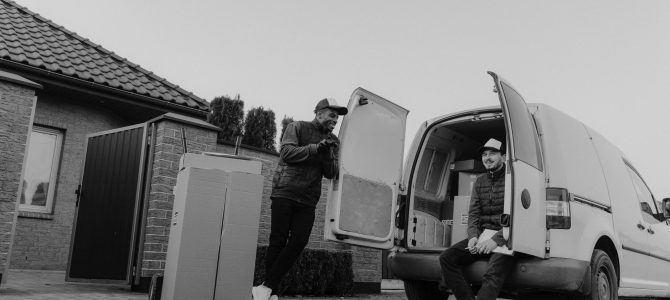
Once you’ve booked, confirm the number that reaches the people actually handling the day: dispatch, the crew lead, or a coordinator’s direct line. A good provider of moving services will tell you plainly which number to call on move day versus which one handles billing or quotes, and it’s worth asking them to spell that out in writing. Save that operational number as your primary, and label the sales line clearly as something else so you don’t dial it by reflex. If your mover works across a metro area like Calgary, ask whether the number routes by branch or by job, because the general line and your specific crew’s contact can be two very different things.

What good is a contact only one phone in the house can open?

The number lives in one person’s phone. That person is at the new place signing for keys while the truck arrives at the old one, and the partner standing by the movers has no way to reach dispatch. A contact saved on a single device isn’t a plan; it’s a single point of failure.

Get the working number onto every phone that might need it, and write it on paper taped inside a box or on the fridge as a backup for the moment a battery dies. Share it in whatever thread the household already uses so it’s searchable by more than one person.

A saved number is only as good as your ability to reach the right person from any device, fast. Before move day:

  • Rename the contact to something you’ll recognize half-awake.
  • Confirm and save the dispatch or move-day line, not just the sales desk.
  • Copy it to a second phone and to paper.
  • Delete the numbers of movers you didn’t book.
post

Get Ready Before You Ask a Contractor for Proof

The moment to sort out how you’ll verify a contractor’s bond is not when they’re standing in your kitchen with a tape measure and a quote. It’s a few days earlier, at your own desk, with time to look things up. Verification goes fast and clean when you already know what bond to expect, what identifying details you’ll need, and where the official record lives. Show up unprepared and you’re stuck taking the contractor’s word for it, which defeats the purpose entirely.

Get Ready Before You Ask a Contractor for Proof

Pin Down Which Bond Your State Requires

Bond requirements are set at the state level, and the dollar amounts and rules vary widely. In California, licensed contractors must carry a contractor’s license bond in a specific amount set by the state licensing board, and larger operations may carry additional bonds for their qualifying individuals. Before you talk to anyone, find out what your state actually mandates for the type of work you’re hiring for. That way, if a contractor names a figure or waves off the question, you’ll know whether the answer lines up with the law or not. Knowing the required amount also tells you what number to look for when you pull up the official record later.

Collect the Contractor Details You’ll Need to Look Anything Up

You can’t verify a bond attached to a name you’ve spelled wrong. Before the first conversation, gather the exact legal business name, the license number, and the name of the person or entity the license is registered under. These three pieces let you match a bond record to the specific contractor rather than to a similarly named company across town. If you already have a business card, an ad, or a referral, write those details down and confirm them. Much of the guidance on checking whether your contractor is bonded starts with the license number for exactly this reason: it’s the key that unlocks the public record, and without it you’re guessing. Keep a simple note with these fields blank, ready to fill in the second you get the information.

Write Out the Questions to Raise at the First Meeting

Prepare your questions in advance so you ask them plainly instead of fumbling for words on the spot. Ask for the license number outright. Ask who holds the bond and through which surety company. Ask whether the bond is current and what its coverage amount is. A legitimate contractor answers these without hesitation, because they field them regularly. The value of writing them out beforehand is that you won’t get talked past them by a confident pitch. Jot down a line or two of space under each question for the answers, and note anything that sounds evasive so you can follow up before you commit.

Line Up the Official Sources for Confirmation

Never rely on a certificate the contractor hands you as your only proof, since documents can be outdated or altered. Instead, know where the authoritative record sits before you need it. In California, the state licensing board maintains an online lookup where you can enter a license number and see bond status directly from the source. Bookmark that page ahead of time. It also helps to note the surety company’s contact information, since you can call them to confirm a bond is active and paid up. Having these sources lined up means the actual check takes minutes, not an afternoon of hunting.

Set a Deadline for Confirmation Before You Sign Anything

Decide now that no contract gets signed and no deposit changes hands until the bond checks out. Give yourself a firm window, say two or three days after the first meeting, to run every detail through the official sources. A deadline keeps a smooth-talking sales push from rushing you past the step you meant to take. If a contractor pressures you to skip it or sign today for a discount, treat that as its own answer.

Do the groundwork ahead of time and the verification itself becomes a quick, confident final check rather than a scramble, leaving you free to focus on the work you actually want done.